


–
It seems a lifetime ago that 21-year-old Vasek Pospisil became an unlikely Davis Cup hero, winning three matches against Israel on the road in a September, 2011 playoff tie that sent Canada to the World Group for the first time in nearly a decade.
Hold my beer, says Liam Draxl.
The Newmarket, Ont. kid, who even kind of looks like a miniature Pospisil with his blonde locks, big blue eyes and flushed red cheeks, pulled off a similar feat Friday and Saturday in Vancouver. He didn’t win all three, but the doubleheader on Sunday puts him up there.
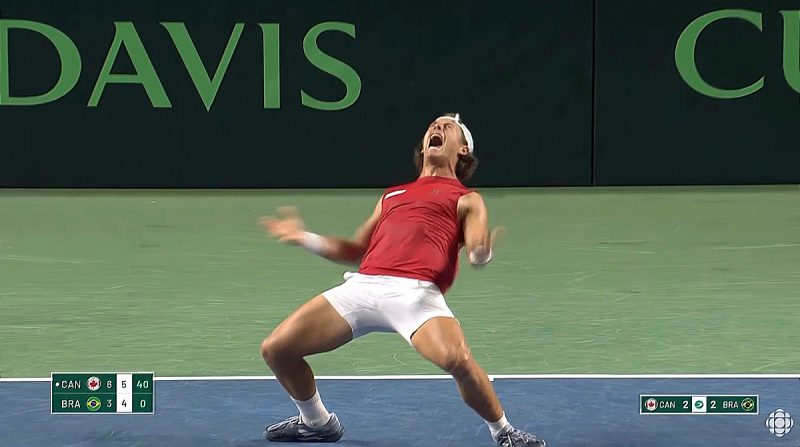
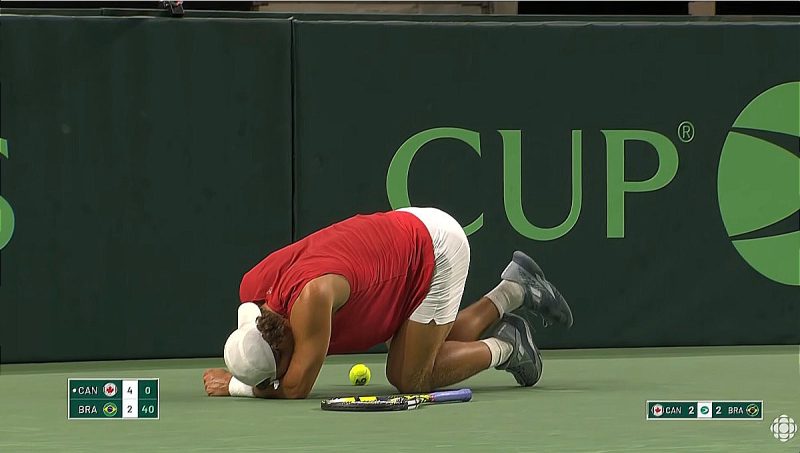
And he did it despite rolling his ankle midway through the first set of the fifth and deciding rubber against Gustavo Heide of Brazil. But after a solid tape job, he beat Heide – Brazil’s hero on Friday when he upset Canadian No. 1 Gabriel Diallo, ranked more than 200 spots higher, to put Brazil in excellent position after the first day.

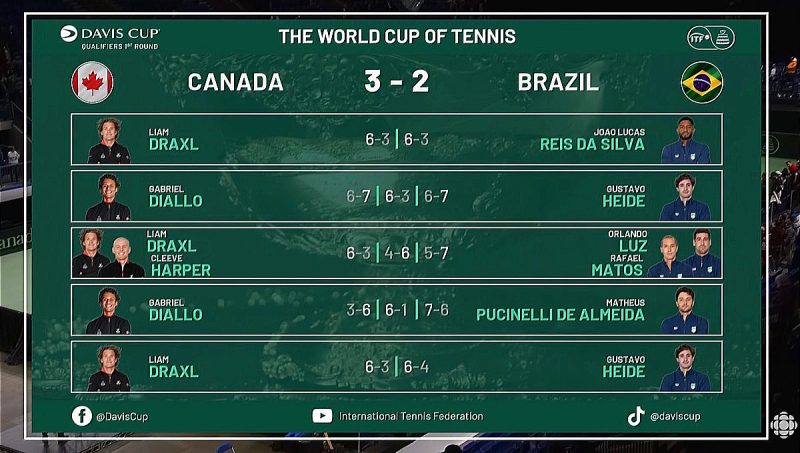
The 3-2 win sends Canada, which won the Davis Cup in 2022 but has fallen on hard times since with the sparse attendance of two top guns Félix Auger-Aliassime and Denis Shapovalov, into a playoff tie in September.
And, unlike the last few years in this constantly changing Davis Cup format, they will have a tie at home rather than have to get through a group event at a neutral venue in Europe. And it will be against … France.


“We’ve done miraculous things in the past, in the last decade, so we’re just going to see how far we can go this year,” captain Frank Dancevic said.
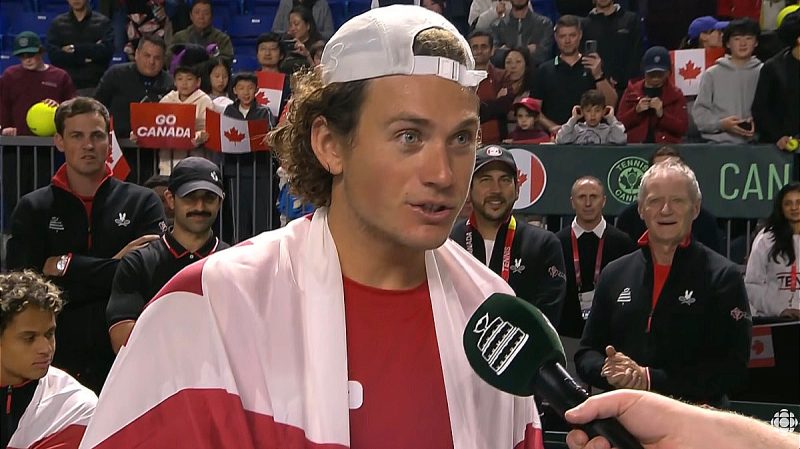
For Draxl, whose trademark grin rarely left him even when things seemed touch and go, it was a thrill.
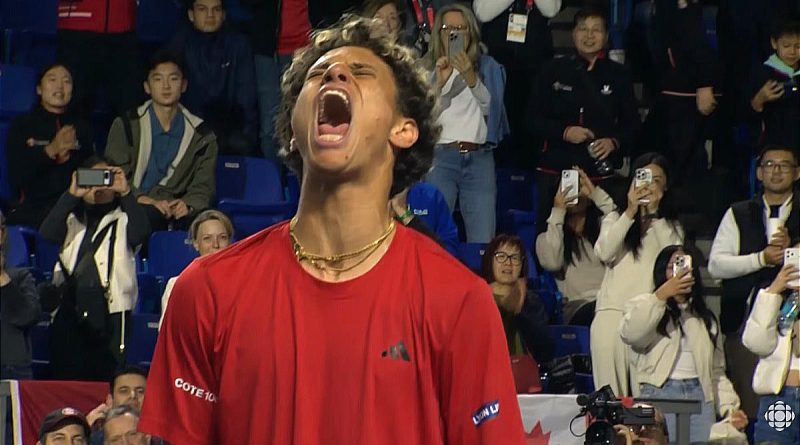
“I really have no words. Probably the biggest match I’ve ever played in my career so far. So much on the line. When you’re a little kid you dream to have big matches like this in your professional career. And playing a fifth rubber for your country is one of those super-cool dreams you have as a kid,” Draxl said. “I just went for it.”

Different era, different format
When Pospisil, who was on hand this weekend as a coach, became a hero back in 2011, the Davis Cup format was the traditional one.
He was ranked No. 124 at the time, close to what the 24-year-old Draxl is now. And he, too, was just weeks from his first-ever career qualification for a Grand Slam main draw, which he did at the US Open. And it was only his second live tie in singles; this was Draxl’s second live tie.
Canada went into Israel as the heavy favorites.
Still, it was a three-day tie with best-of-five set matches. And Canada’s top gun, Milos Raonic, hadn’t played since slipping on the grass in the second round of Wimbledon that year, necessitating hip surgery. He was beaten in four sets by the rather obscure Amir Weintraub, after Pospisil had pulled off a five-set win over the more highly-ranked and far more experienced Dudi Sela.
The next day, he teamed with Daniel Nestor to win the pivotal doubles and, after Peter Polansky stepped in for Raonic was beaten by Sela, came back on the Sunday for the fifth and deciding rubber. He won in straight sets over Weintraub, and his legend was born.

(You can hear Open Court in the background asking that question , lol).
Doubles before singles
These days, Davis Cup matches are best-of-three set affairs. But the five rubbers are condensed into two days.

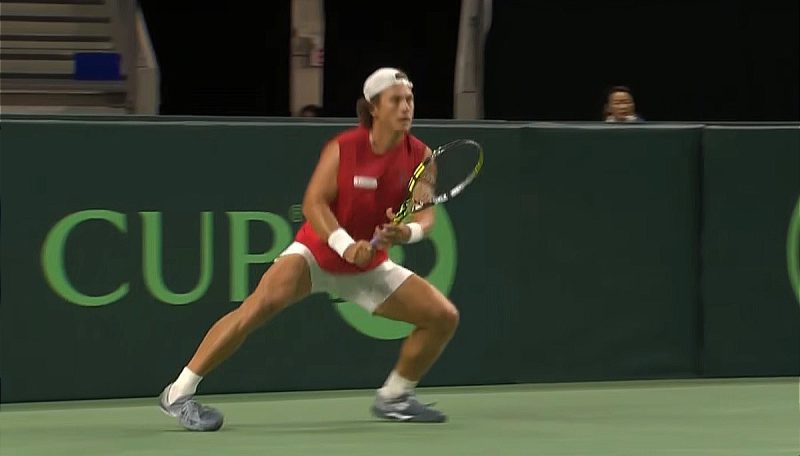
And if a squad doesn’t have a dedicated doubles duo, it gets tricky because Draxl started Saturday playing the doubles with Cleeve Harper against the far more accomplished Brazilian team of Rafael Matos and Orlando Luz.
It took 2h40 for the Brazilians to prevail, to put themselves up 2-1.
And then – hours later, after Diallo had saved the Canadian bacon with a third-set tiebreak win over Matheus Pucinelli de Almeido (barely inside the top 300) – Draxl had to step back out on the court.
It’s extremely rare that a player will play their doubles before their singles in the professional ranks. So it seemed like a tough ask – especially given the length of the doubles.
But that’s where Draxl had a bit of an advantage. Four years playing top-level college tennis at the University of Kentucky, where the format for dual matches is doubles first, would make this no big deal for him.
The rolled ankle, at the time, seemed bigger.
“I was a little scared. I’ve rolled that ankle before. It was hurting for a few seconds here,” Draxl said. “But when the team was doing the tests and it wasn’t hurting I knew I would be okay, thank God.”
Far too close a call

If Davis Cup is a mere shadow of its former self, it still matters to a lot of people.
And having a top-40 player like Diallo be the third-best Canadian, but ready and willing to step up, at this stage of his career, is big.
But Diallo is struggling to start the year, having made a coaching change with Tennis Canada coach Martin Laurendeau now out, and a Swedish tandem including Jonas Bjorkman in.
The Canadians were fortunate that the biggest up-and-coming star in Brazil, Joao Fonseca, took a pass on this tie as he tries to get healthy to start 2026. He’s preparing for an important clay-court swing back home in South America.
It’s notable, too, that the three players who got it done over the weekend all came out of the U.S. college system, with Draxl and Diallo teammates in Kentucky, and Harper an NCAA doubles champion at the University of Texas.
None of them were prized Tennis Canada pupils; Diallo, so often hurt in his younger days as he grew to his eventual height of 6-foot-8, was discarded by the federation and picked up by Auger-Aliassime’s father Sam, a tennis coach in Quebec City. It was only when he blossomed late in college that they re-assimilated him.
Draxl, whose father Brian is a tennis coach, always did his own thing. Harper was also a late bloomer, upping his level through a long college career that went through a red-shirt year, the pandemic, an ungraduate degree and a Masters’ in finance. He didn’t begin to take tennis seriously until later on and, like Draxl, operated outside the little bubble.

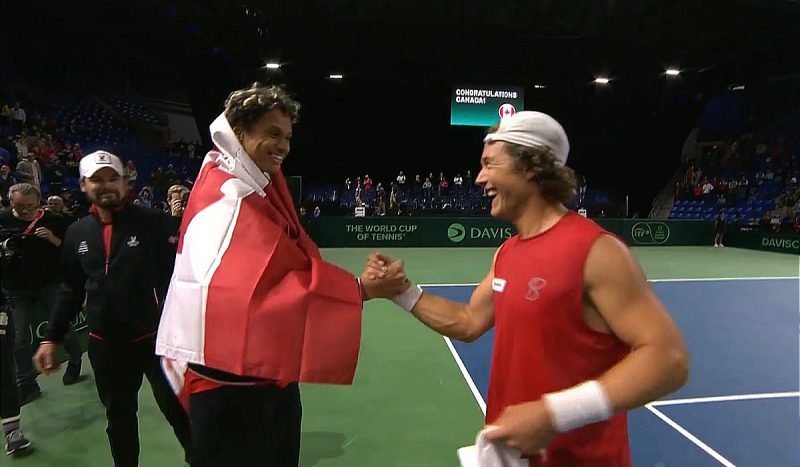
And, the kiss of death for federation support, he doesn’t have singles aspirations but is working towards a career as a doubles specialist and has already gotten himself into the top 100.
But on this weekend in Vancouver, these three answered the call. Big time.
None more than new hero Draxl.
(Screenshots from the CBC’s YouTube broadcast).
