


–
The hot take when a player is struggling or returning from injury with the resultant rankings drop is always, “Oh, they should go play lower-level tournaments and grind their way back the hard way”.
It’s a lovely theory. But reality often exposes it as facile and hardly a surefire road back to the top.
Canadian Bianca Andreescu, who turns 26 in June, has done just that this year. She began her season playing at the lowest level of ITF tournaments in Florida, and did very well while getting some matches under her belt.
But beyond a great effort at a WTA 125 in Austin last month, it’s been tough going since then.
Andreescu likely could have squeezed into the qualifying at the Madrid WTA 1000 this week; players ranked lower than her at the qualifying deadline (Elvina Kalieva, Linda Fruhvirtova, Lucrezia Stefanini, Teodora Kostovic) took their shot.
Instead, she went to Oeiras, Portugal as the No. 4 seed at a WTA 125 event on clay.
Good plan. Except she ran into France’s Fiona Ferro. On Tuesday, she was defeated 6-0, 2-6, 6-4 and is out in the first round.

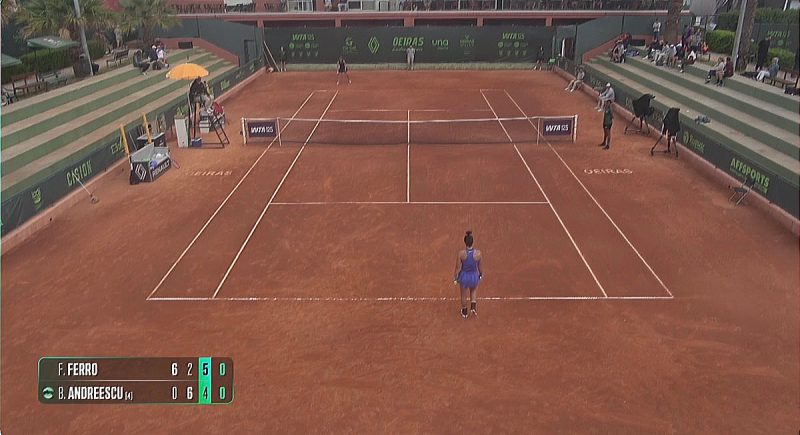
She’s entered in a similar tournament in Saint-Malo, France next week.
The spotlight dims
It’s now been more than seven years since Andreescu’s breakout title at Indian Wells when she was still just 18. It’s been a roller-coaster. But the toughest thing to do, when you’ve been at the top, is to put away the ego and get back down to the lower levels.
Especially when you’re a player who came to life when the spotlight was at its brightest.
It is a move that is SO fraught. Not just because the women on the ITF circuit and, particularly, the WTA 125 level can play. But because it comes with a whole different set of pressures. The pressure you put on yourself that you “shouldn’t even be there”, and that you “should” win easily. But also the fact that it’s more likely a less-accomplished opponent is going to consider you fair game as you play on “their” turf.
And there’s also the knowledge, if you think about it with cold-headed realism, that it’s a loooong road back. You can’t get ahead of yourself, and yet it’s so hard not to.


For Andreescu, the time is now
For a few years, Andreescu didn’t fully invest in her comeback. She promoted her hitting partner to coach, which might have saved some money but wasn’t a big-picture move.
And, of course, whenever she did get a little momentum, another stroke of bad luck would hit.

She now has the experienced Dusan Vemic in her corner. Which is a positive step forward. She began the season ranked No. 227 and has already lopped 100 spots off that number. At No. 127, she is at her highest ranking since last June.
But the losses have been tough: Dalma Galfi in Austin. Kamilla Rakhimova at Indian Wells. Katie Volynets in Miami qualifying. And now Ferro.
Heartbreaker at BJK Cup
And there was that heartbreaking loss at Billie Jean King Cup in Kazakhstan a few weeks ago, which Andreescu was playing for the first time since 2022 and for only the second time since 2019.
With the absences of Leylah Fernandez and Victoria Mboko, she was also counted on to take the lead at the No. 1 singles position.

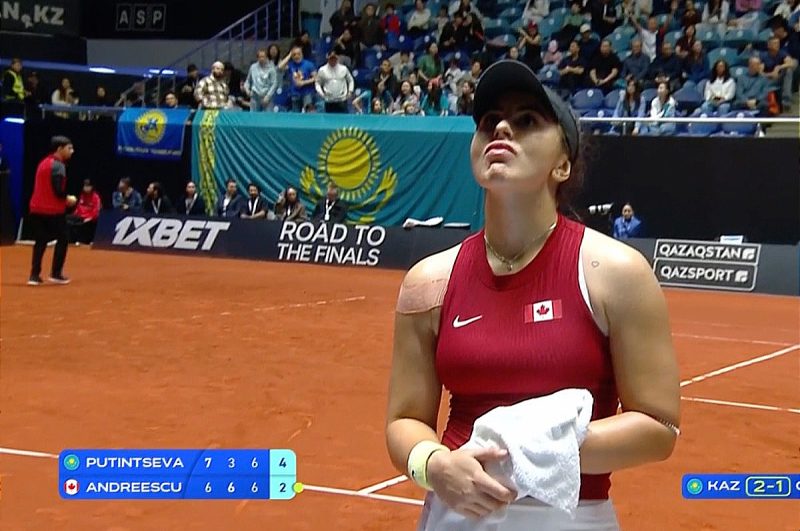
She ran up against her friend Yulia Putintseva, and went out 7-6 (5), 3-6, 7-6 (4) to send Canada back down to the qualifying in November.
It was a big ask; with the tie at 1-1, Andreescu was pressed into service in doubles. In the new format, the doubles is played before the reverse singles on the second day of the event.
Paired with someone she had never teamed with before, lefty Kayla Cross, Canada went out in straight sets. And then Andreescu had to come right back and play singles – something she’d likely not ever done. At least not for eons.

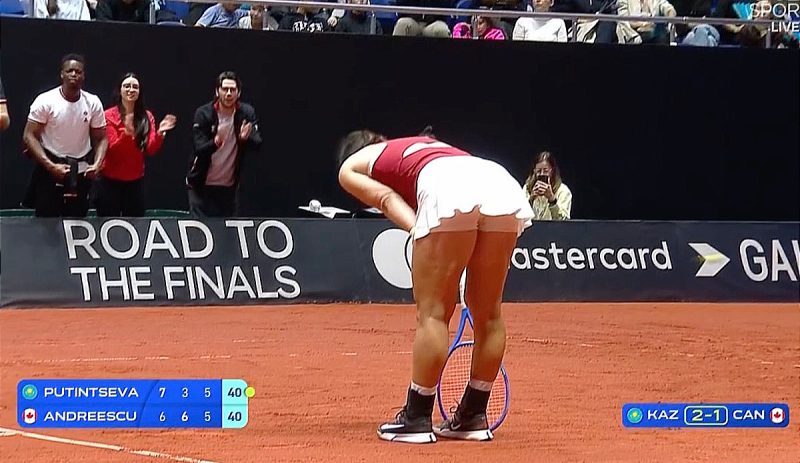
It went three hours, 39 minutes – more than 90 minutes for the third set alone. She won one more point than Putintseva, 122-121. She gave it absolutely everything she had and you have to think, had it not been her second match of the day, things could have turned out a lot differently.
On the plus side, she probably answered any questions she might have had about fitness.
The game’s the thing
But the truth about her game is that while you look at it and see a lot of glimpses of vintage Andreescu, it is both similar and very, very different.
The repeated ankle issues have clearly taken a toll. She has the big supports on both ankles now. And her movement isn’t nearly what it was.
As a result, she’s not dictating as she once was and spends too much time trying to scramble, instead of trying to impose her unique, rhythm-disrupting game.
She’s hitting more moonballs than she did, even at her moonball peak – perhaps, in part, a function of not quite getting to as many balls and wanting to give herself time.
It feels like she’s not hitting her forehand nearly as hard as she was at her best. And her serve has morphed into sort of a quick-serving, Conchita Martinez-type delivery that hasn’t proven reliable.

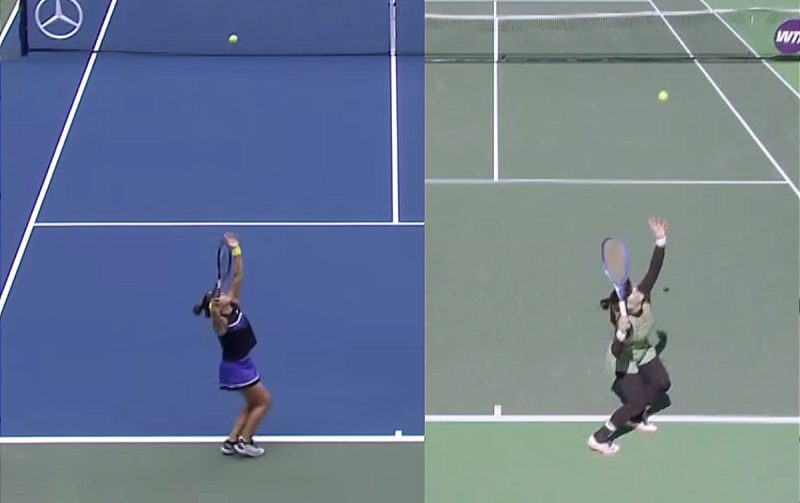
We’ll leave it to the technical serve experts to dissect. But the toss is much lower and further to the right, which might work okay on a slice serve but has resulted in missing that first delivery either way long or into the net a lot more.
All those things come with repeated and lengthy periods off court. And with the lack of a quality coach for those many years to see when technique is going off the boil and making immediate corrections.
The other factor, as with Genie Bouchard and even players like Naomi Osaka, is that the level of the game has increased since 2019. And, as Bouchard found out and Osaka also is finding out, the battle is daunting even to get to your previous high level, attained when you were young, fearless, healthy and confident. That level becomes baggage, too; in some senses you’re lifting heavier weights, battling against the player you once were.
Even if they got back to that, it still won’t play the same in 2026. In the interim, everyone has improved.
You feel for Andreescu, who has had more than her share of setbacks. She is trying SO hard to find a healthier life-work balance, shrug off the instinct to define herself by her tennis results – as so many have defined her, most of her life – and mature into adulthood under the spotlight.
Her attitude through all these struggles has been exemplary. Even as things were getting so tough in that match against Putintseva in Kazakhstan, you could almost hear the internal dialogue she was having with herself: “Keep fighting”, followed by a determined nod of the head.
That’s all she can do.