
–
Four years ago on Tuesday, Russia invaded Ukraine. It’s hard to fathom it’s been so, so long.
But it reminded us of a moment we captured at Indian Wells, just a few weeks later in March, 2022 when Ukrainians met a Russian and a Belarusian on the practice courts.
On court were two Ukrainians, Dayana Yastremska and Lyudmyla Kichenok, as well as Yastremska’s kid sister Ivanna. Yastremska was 21 at the time; her sister Ivanna was 15.
Next court over were the Russian Yulia Putintseva, who now represents Kazakhstan and Aliaksandra Sasnovich, from Belarus.
When the clock hit the top of the hour, the two came into the court to replace the Ukrainians.
There were no words. Sasnovich nodded to Yastremska as they crossed paths (as you can see in the video), but there was no acknowledgement from her.
Maybe no one even noticed beyond those players and perhaps Open Court. But while it seemed like … not much, it felt like there was a poignancy to it – enough that we still remember it vividly to this day.
It was all still so very new, and raw, and surreal at the time. Players who shared similar cultures and languages, who may have been quite friendly, were suddenly enemies due to elements completely beyond their control.
Just so much awkwardness, so much not knowing what, exactly, to do. Or not do.
The Yastremska saga
All of this came just a week after Yastremska had a terrifying journey as she and her sister left Ukraine by boat, through Romania.
They ended up in Lyon, France, which offered safe harbor at the WTA 250 tournament held there at the time, which Yastremska had received a wild card for just days before the first bombs hit. She and her sister also received a wild card for the doubles, which marked Ivanna’s pro debut.
So much water under the bridge since then.
Four years later, precious little has changed
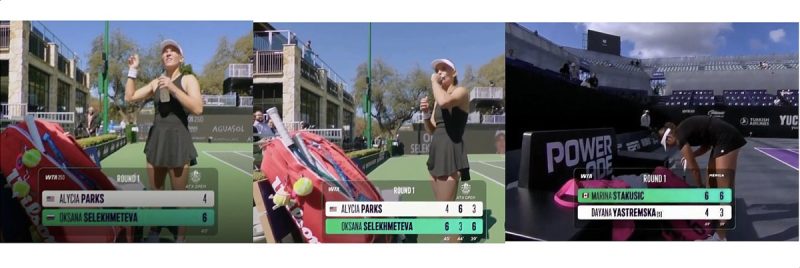
The flags of the Russian and Belarussian players remain blanks on scoreboards from one end of the globe to another
(There were some technical glitches from the WTA streaming providers this week, where the Russian flag appeared next to Oksana Selekhmeteva’s name for part of her match against Alycia Parks, and the Ukrainian flag disappeared next to Yastremska’s name during her loss to Canadian Marina Stakusic in Mérida. The usual online and trash site suspects hopped on this and tried to make it a *thing*, when it was not “news”, for awhile).
The Russians and Belarusians were banned from Wimbledon and the UK tournaments in 2022. Which was … something.
Seven Russian (no Belarusian) players competed at the 2024 Olympics in Paris as “Individual Neutral Athletes”: Daniil Medvedev, Roman Safiullin and Pavel Kotov on the men’s side, Ekaterina Alexandrova, Mirra Andreeva, Diana Shnaider and Elena Vesnina on the women’s side.
And the ongoing “non-handshake” moments continue, as the more casual fans remain mostly unaware that the Ukrainian players will not shake the hands of Russian/Belarusian opponents after matches.
Sometimes the tournaments will flash something up on the scoreboards; sometimes not. Because the Ukrainians have been booed on these occasions, simply because the fans didn’t know.
Some Russians who have taken other citizenships, even recently, seem exempt from this policy.
New citizenships abound
It hasn’t happened nearly as often on the men’s side, but a fair few Russian players have taken on new citizenships in the last couple of years.
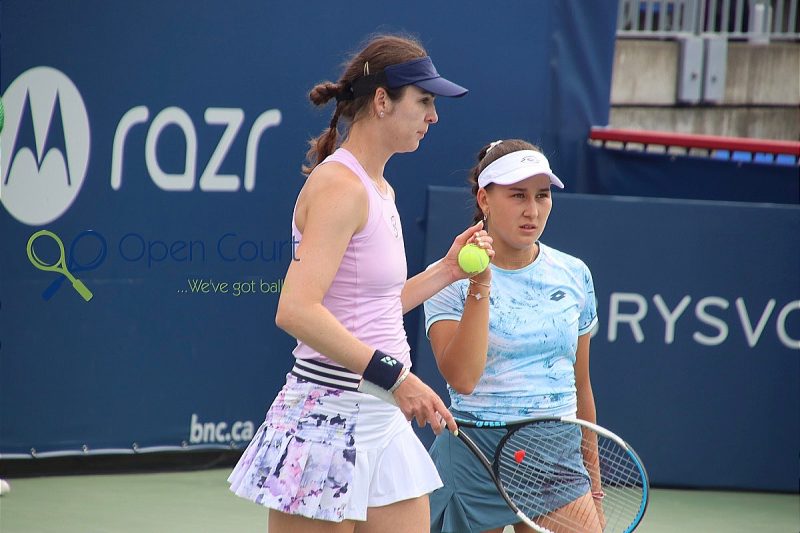
It’s different from the wholesale move to Kazakhstan, which included Elena Rybakina, Yulia Putintseva, Alexander Bublik, Alexander Shevchenko and others who took advantage of that option because the Kazakh federation, awash in money, was willing to part with some of it to help finance their training.
The exodus was led by Daria Kasatkina, who now plays under the Australian flag.
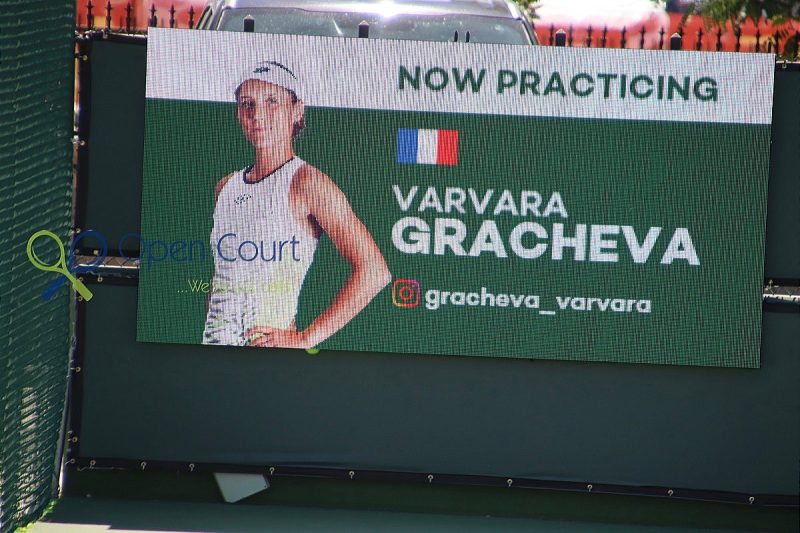
Becoming French are Varvara Gracheva and, more recently, young Ksenia Efremova.
Elina Avanesyan began playing for Armenia, the homeland of her parents.
Maria Timofeeva and Kamilla Rakhimova began playing under the flag of Uzbekistan.
And, somewhat randomly, Anastasia Potapova began representing … Austria.
What’s ahead?
That’s the big question. There seems to be no end in sight for the hostilities.
But beyond the “neutral athlete” posture, the compromised International Olympic Committee has decided to allow six Russian and four Belarusian athletes to compete under their own flags, with their own national anthems should they win gold medals, at the Paralympic Games in Italy next month. They say it’s a firm decision, because of their (sudden?) “commitment to inclusivity”.
It’s not going over well. The Ukrainian Paralympic Committee says its athletes will boycott the event as a result, and demanded its flag not be used there. The Austrians and part of the Polish team also plan to boycott the opening ceremonies.
The Estonian public broadcaster has announced it won’t broadcast the Paralympics if Russian and Belarusians are allowed to compete.
The Russians have confirmed that some 500 veterans of the Russian invasion of Ukraine are part of the country’s Paralympic athlete squad.
The Netherlands has announced it will cancel its hosting of this summer’s European Paralympic Swimming Championships as a result of this re-opening of the events to the Russians and Belarusians.
The International Tennis Federation, which is under the IOC umbrella, has never shown much backbone in resisting whatever the IOC requires in exchange for its funding. So it’s hard to know what comes next.
You can only hope that by the next Summer Olympics in Los Angeles, we won’t be talking about it.

About Post Author

Great story – backed up by the video. As you write, maybe these players were friends before, or just hitting partners on the practice courts, No longer.
Great review