–
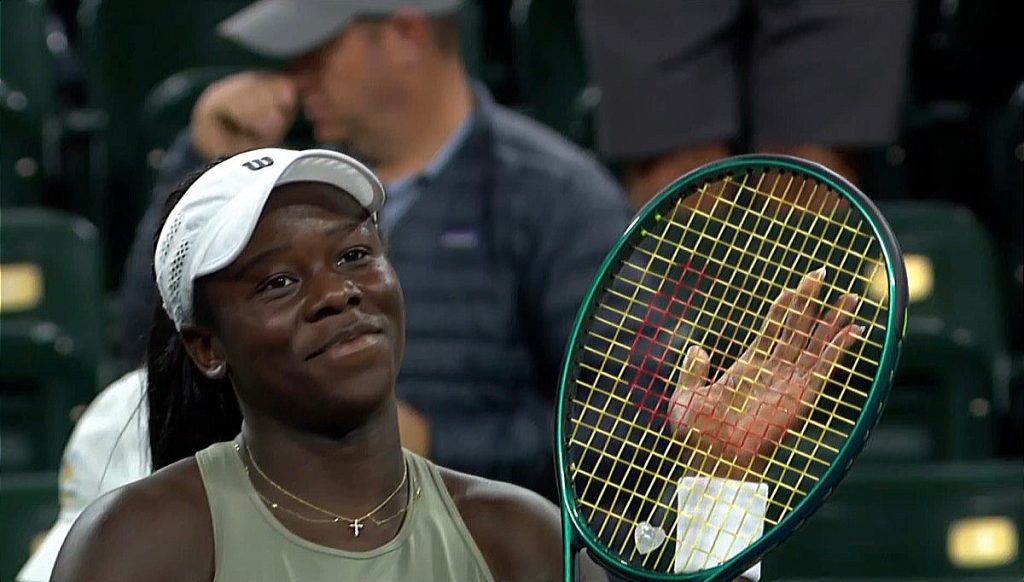
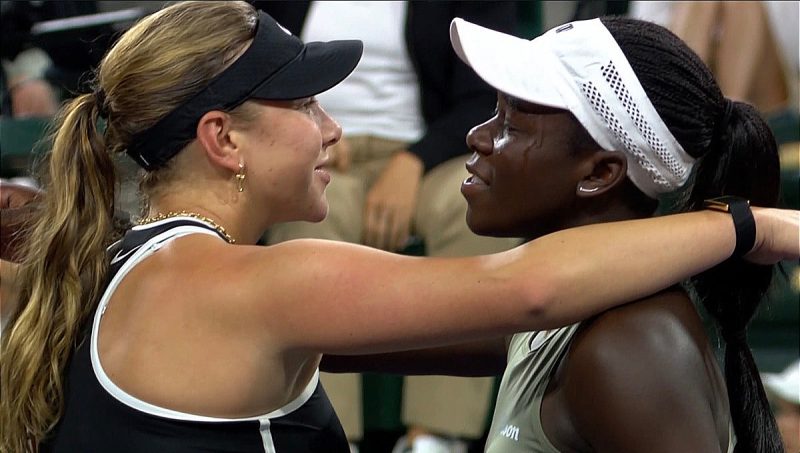
“Good job,” a smiling Amanda Anisimova said at the net as she reached out to give Canadian teen Victoria Mboko a big hug.
The 19-year-old had just dismissed the world No. 6 – a 6-4, 6-1 performance of such calm, consistency, power and quality that Anisimova had no answers through the brief one hour, 13 minutes that it lasted.
None.
Mboko doesn’t always play this well. But it’s a level she’s more than capable of.
And perhaps the next step in her ascension is what she has done with more frequency in the last few months: instead of getting off to a slow start because of nerves and having to play catchup, she’s arriving on court with the confidence wrought of increasingly impressive accomplishment.
And if that becomes a regular thing, she’ll be an even more dangerous opponent than she already is.
Win the first set, win the match
The stats bear that out in spades. Since the start of the 2025 Miami Open – so almost exactly a year, and just about all of it at the top level – Mboko has won the first set in 38 of her matches.
She has won 29 of them in straight sets, and seven more in three sets. The only two that have escaped her were her first meeting with Coco Gauff in Rome last year. And then her final round of qualifying to make her first Wimbledon main draw, which she lost to Aussie Priscilla Hon.
That’s it.
She also has come back from a first-set loss to win more than a dozen times in that span. But it’s the mark of a champion to be a great frontrunner, perhaps even more than it is to be a great scrapper. That efficiency leaves you with more energy at the pointy end of tournaments when you need it the most.
First tourney as a top 10
“I feel like I tried to match her pace a little bit, stay with her as much as I possibly could. So I’m glad I got it done,” Mboko said.
In reality, it was Anisimova who struggled to match HER pace. And the disparity in movement was evident as an increasingly agitated Anisimova simply couldn’t keep up.

Anisimova’s game (at least in the pros) is to hit through people. When she can’t do that, she doesn’t have the tools to play defence long enough to get it back on her terms.
Here’s some post-match audio provided by the WTA (sound quality a bit dodgy).
This is Mboko’s first tournament as a top-10 player – she’s at No. 9 in the live rankings This was her fourth win over a now-fellow top-10 player this season and she has a 17-4 record.
She faces her biggest test in the quarterfinals on Thursday – world No. 1 Aryna Sabalenka.
The two squared off in the fourthround of the Australian Open in January, a match in which she began slowly – perhaps a little overawed by the opponent and the occasion and in keeping with many of her matches in her early career. But she found stride, albeit a little too late in a 6-1, 7-6 (1) loss to the eventual finalist.

Progress through experience
“It’s crazy playing this tournament for the first time and being in the top 10. It’s a little bit weird for me. There’s some pressure that comes with it, but I’m playing it for the first time. So (I)don’t expect anything of myself; just play my game and see what happens,” Mboko said in a Tennis Channel interview.
“Each tournament it gets a bit higher, I could say. The more milestones I achieve I kind of want to go for more. But I’m a person who doesn’t really set goals for myself because I like to kind of surprise myself as we go. As long as the trajectory is up, whether it’s a good feat or bad, that’s all that matters to me,” she added.
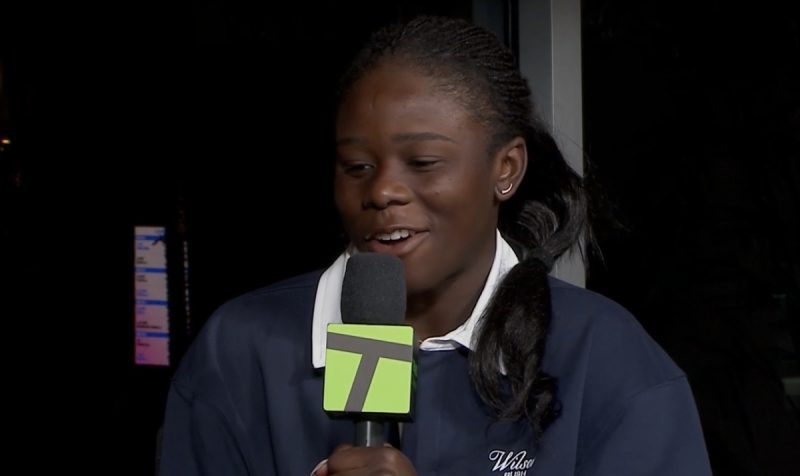
“I feel like last year everything came super quick, and I feel like I wasn’t really prepared for everything that was going to happen. But ever since the Australia swing, getting a lot of matches, playing so many of these top players, it prepared me mentally and physically for what’s to come.”
No pressure – still
Mboko is a completely different personality than Anisimova, on a different path.
But it’s worth a few words of commiseration with the American, who was a brilliant junior who jumped into the big leagues and, at 17 and ranked No. 51, went all the way to the semifinals at Roland Garros.
It wasn’t long before she had to take a break, the weight of expectations – her own, and those of others – just got to be too heavy.
She returned with a fresh attitude and reached two Grand Slam finals last year. But then, almost inevitably, she began regressing to those familiar patterns, patterns that are developed in childhood and are so terribly hard to get rid of.
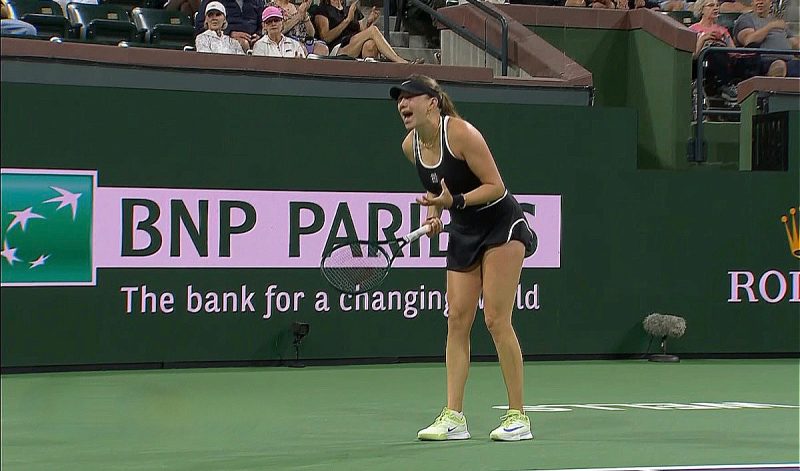
She came so close to picking off a major. And she started to feel she needed to do more, work harder, practice better. And it’s been obvious that the newfound serenity might only have been temporary; just her reactions on the way to the defeat against Mboko show that.
All of which to say that for Mboko, this is the easy part.
That trajectory of ascension is almost easier than the road travelled to stay up there.
Cautionary tales
It was seven years ago that 18-year-old Canadian Bianca Andreescu, in on a wild card as she was outside the top 50, came to the desert and won the whole thing. It set her on a path of expectation that went through a Grand Slam title. But the years since have been challenging.
The same day Mboko was smiling her way to an Indian Wells quarterfinal, Andreescu was in Austin, Texas at a WTA 125-level event. She needed three sets to get past No. 3 seed Solana Sierra, who had been double-bageled rather ignominiously by Mirra Andreeva a few days earlier in the desert.
Andreeva, a little younger than Mboko but already more accomplished and the defending champion this week, has shown the effects of those same pressures and expectations in the last six months – most recently after her loss to Katerina Siniakova Tuesday.
She rallied well later in the day, posting a good win in doubles with her partner … Mboko. But it’s concerning.
Mirra Andreeva al público de Indian Wells luego de perder.
— Set Tenis (@settenisok) March 10, 2026
“Fuck you all”
pic.twitter.com/0asWwA9QfE
So the cautionary tales are all there. For now, it’s all upward for the Canadian.
She’s making it look easy. Long may that reign.
About Post Author

More Stories
WTA Roma – Monday, May, 11, 2026 final results
ATP Roma – Monday, May 11, 2026 final results
Roma doubles – Monday, May 11, 2026 final results